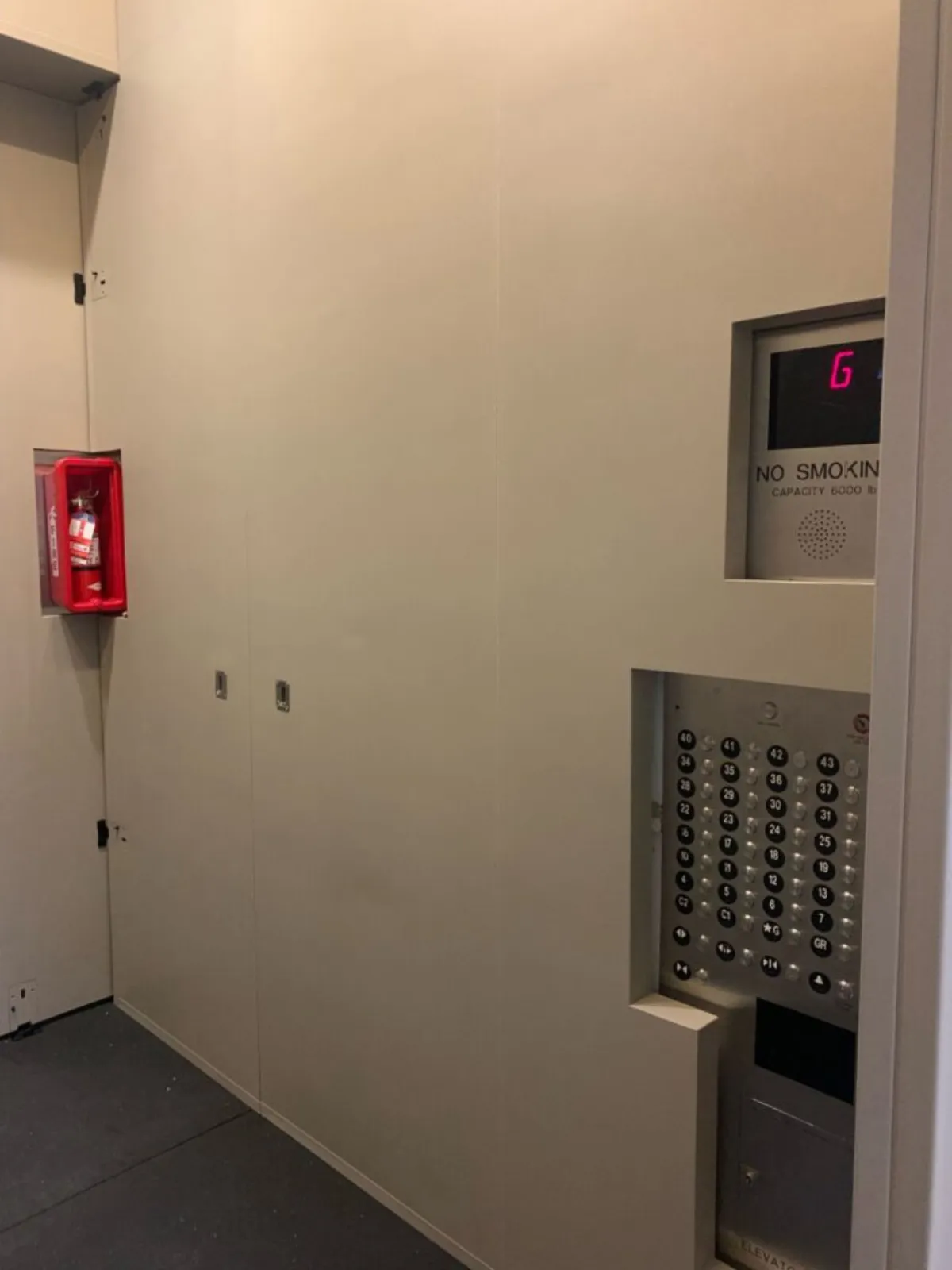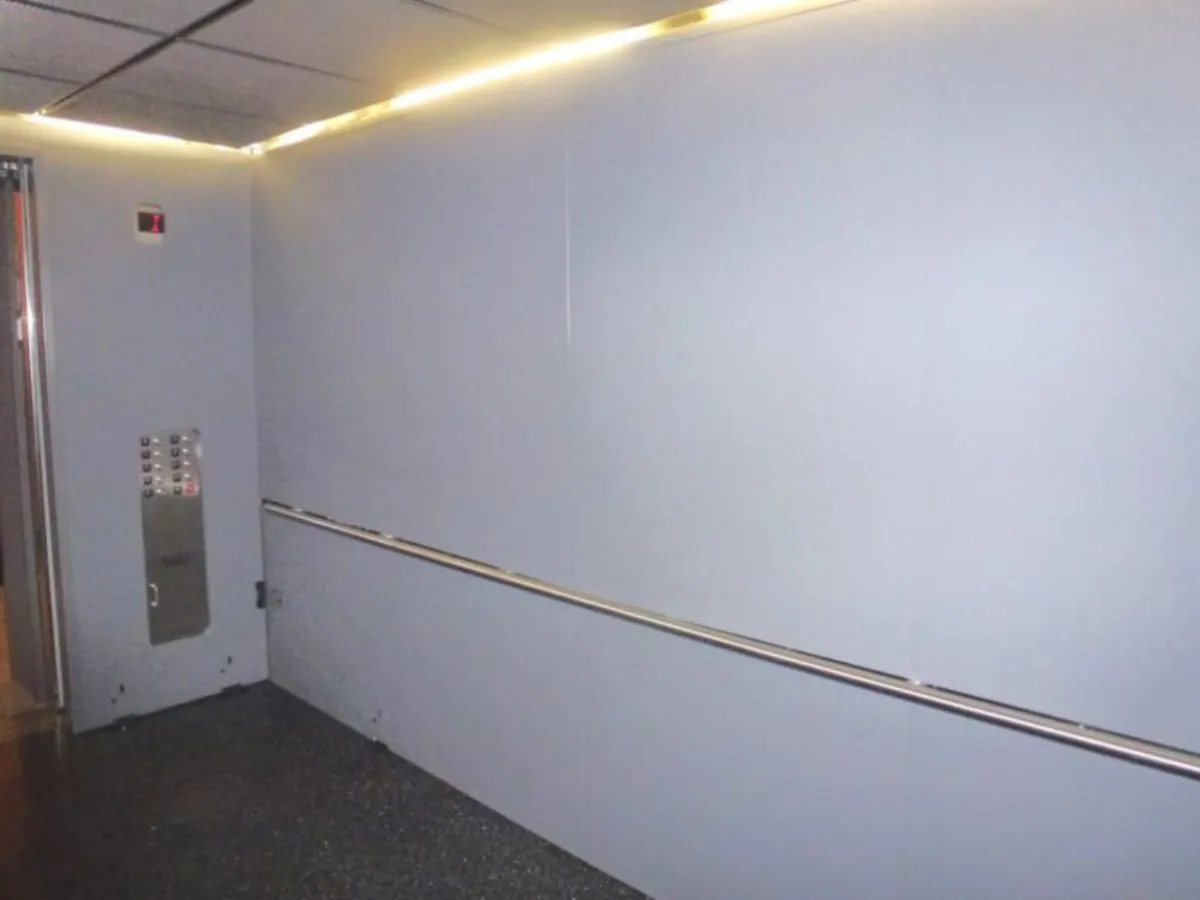
Walls get all the attention. Then a mattress goes in on end, a ladder swings, or a 10-foot length of conduit comes through the door, and the drop ceiling is on the floor.
How ceilings get hit
- Furniture carried on end: mattresses, sofas, wardrobes, headboards.
- Long goods: conduit, pipe, trim, ladders, doors.
- Sheet goods on a cart tilted to clear the entrance.
- Appliance boxes stacked two high.
Drop ceilings, light diffusers and decorative panels are the least robust surfaces in the cab and the ones most buildings leave uncovered.
What it costs
Replacing a drop ceiling and lighting runs roughly $2,000 to $6,000 per cab, more for custom panels, plus a service call to make the car safe if a panel falls. See the full refurbishment cost breakdown.
Why pads and curtains cannot help
Pads hang from the top of the wall. Curtains hang from a track. Neither has anywhere to attach to the ceiling, and a soft panel overhead would sag into the car anyway. Ceiling protection has to be rigid and has to be supported by the walls.
How a ceiling liner works
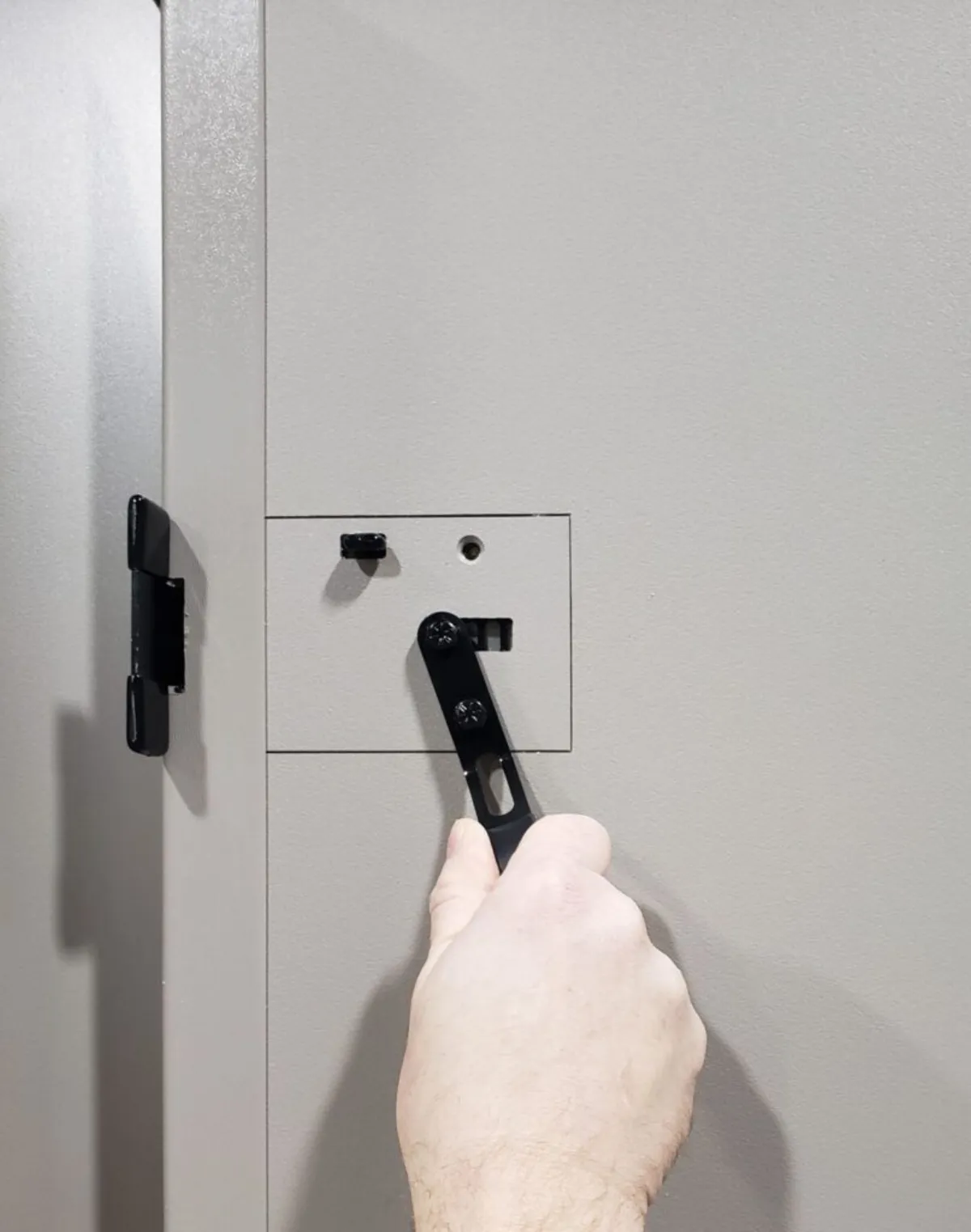
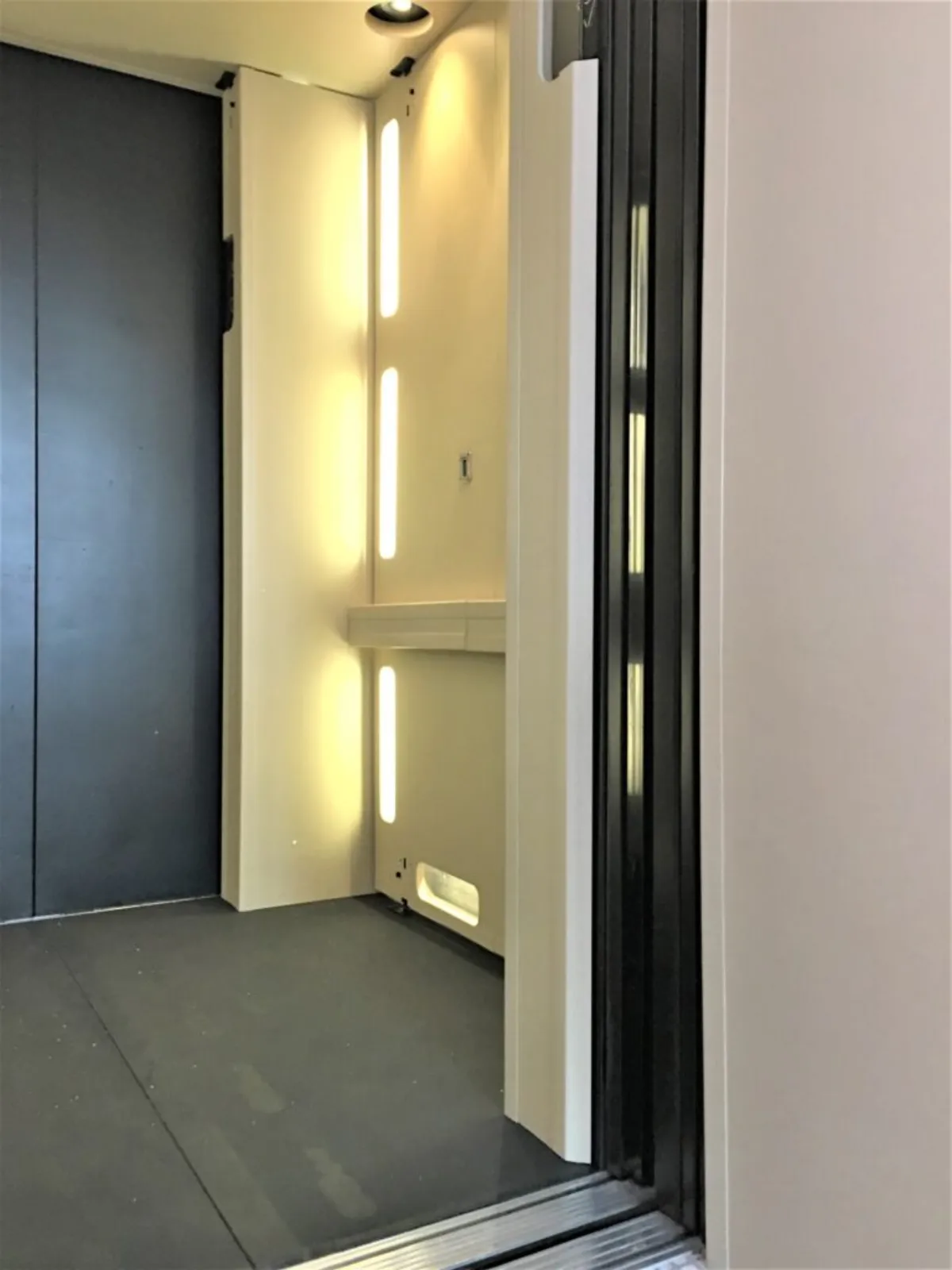
Door Guard’s ceiling liner is an option on the Cab Liner. The wall panels are built to receive it, so it sits on the wall set rather than on the ceiling itself. It goes in only when a job needs it, which keeps everyday installs fast, and it stores flat with the rest of the kit.
Pair it with a wall-height extension in cabs over eight feet so there is no gap between the top of the wall panel and the ceiling liner.
When to specify it
- Residential buildings where move-ins bring mattresses and wardrobes.
- Any construction or renovation where long goods or sheet goods ride the car. Our sister site covers construction protection.
- Hotels and hospitals moving beds and equipment; see hotel and hospital elevator protection.
Getting it quoted
Add “ceiling liner” to the quote request along with the cab measurements. Door Guard confirms the configuration and price within 24 hours.