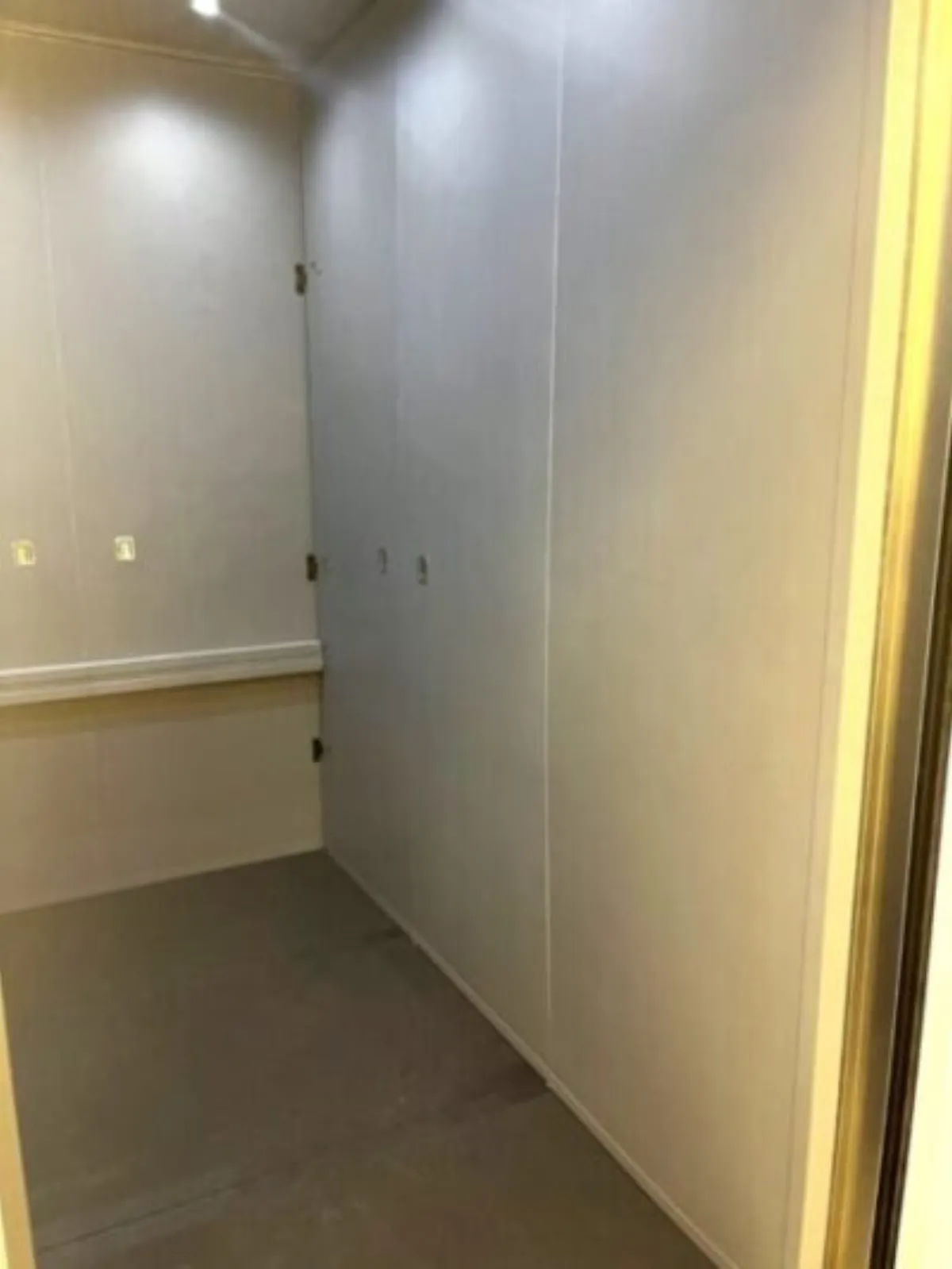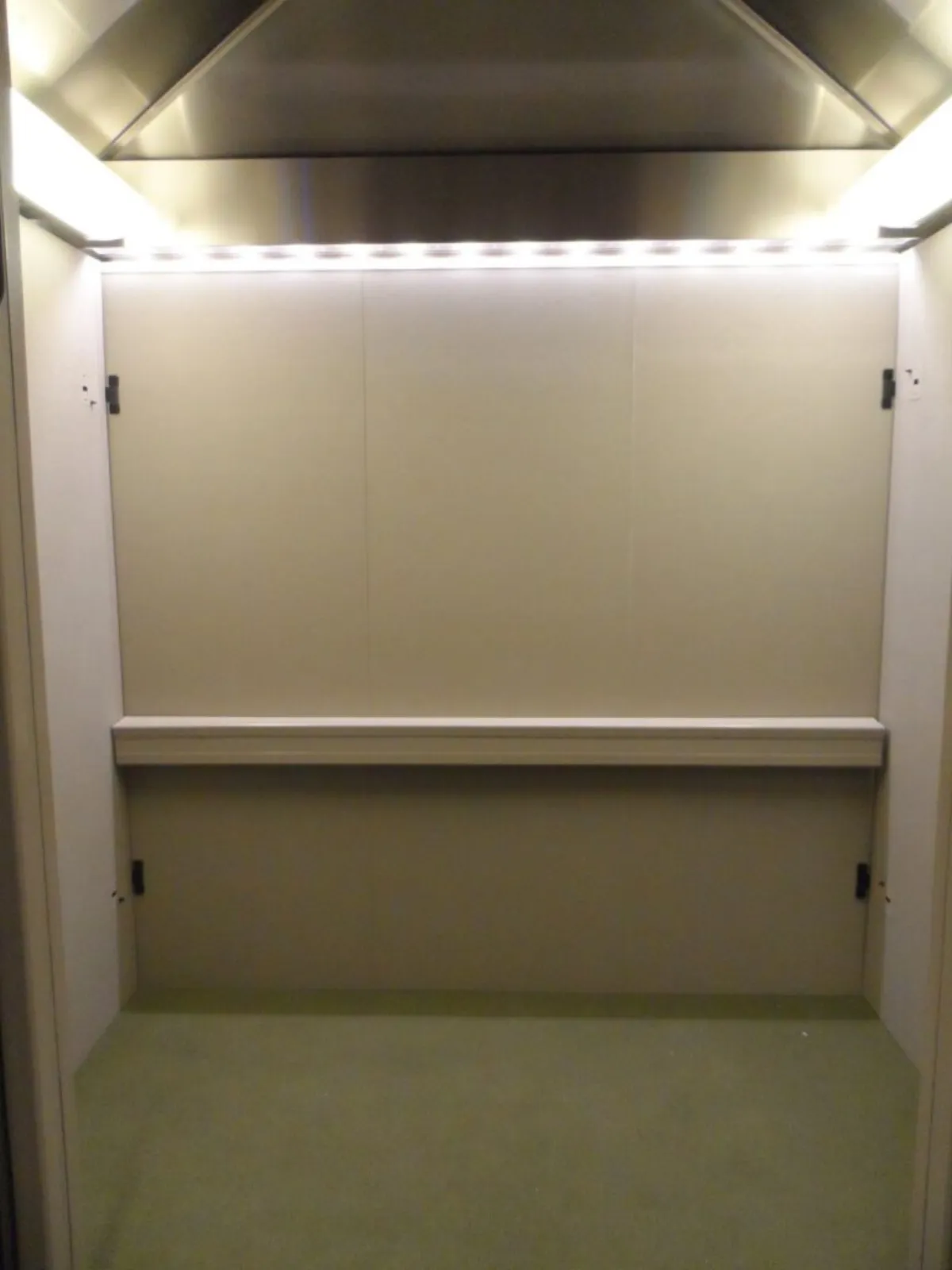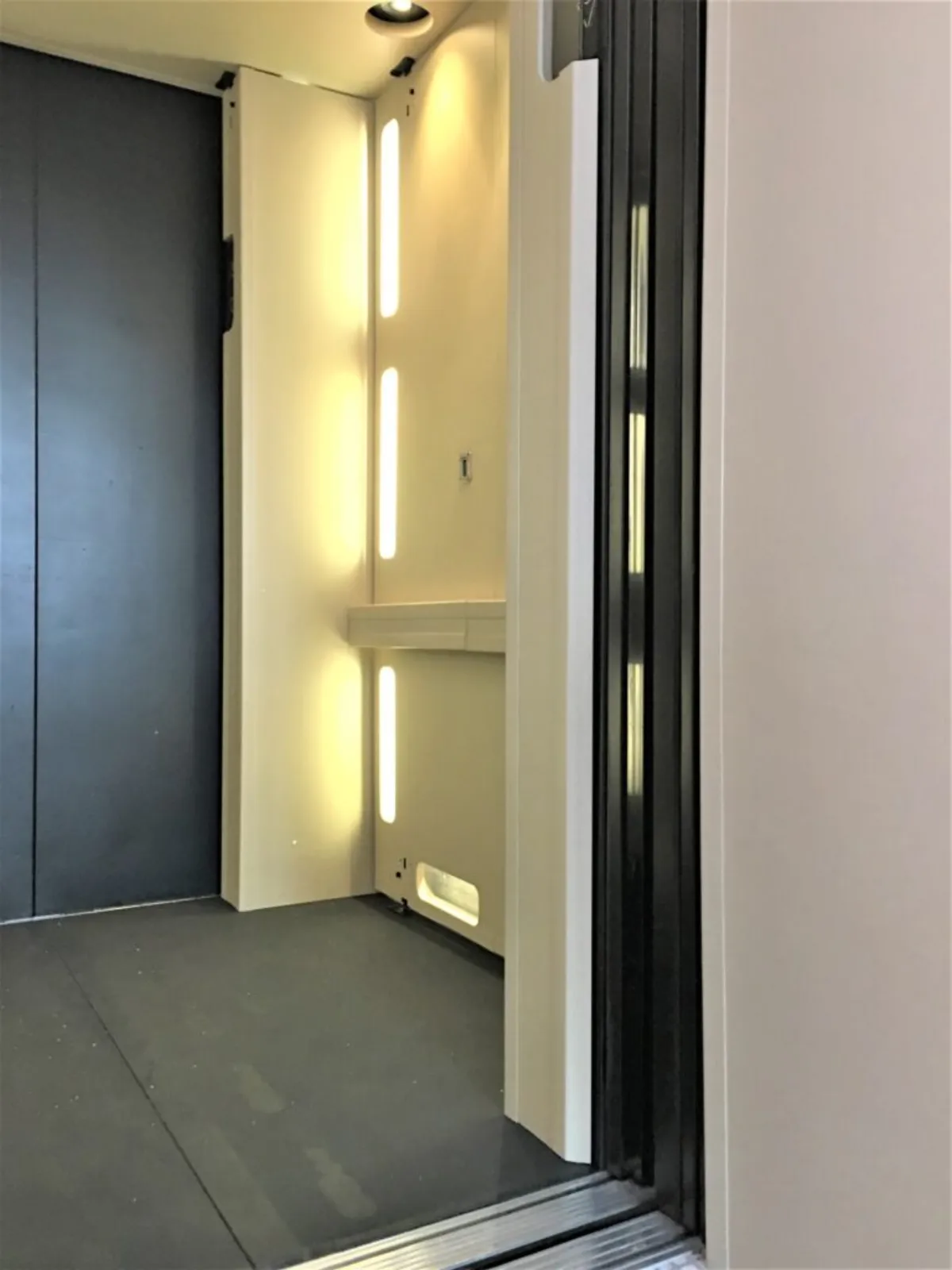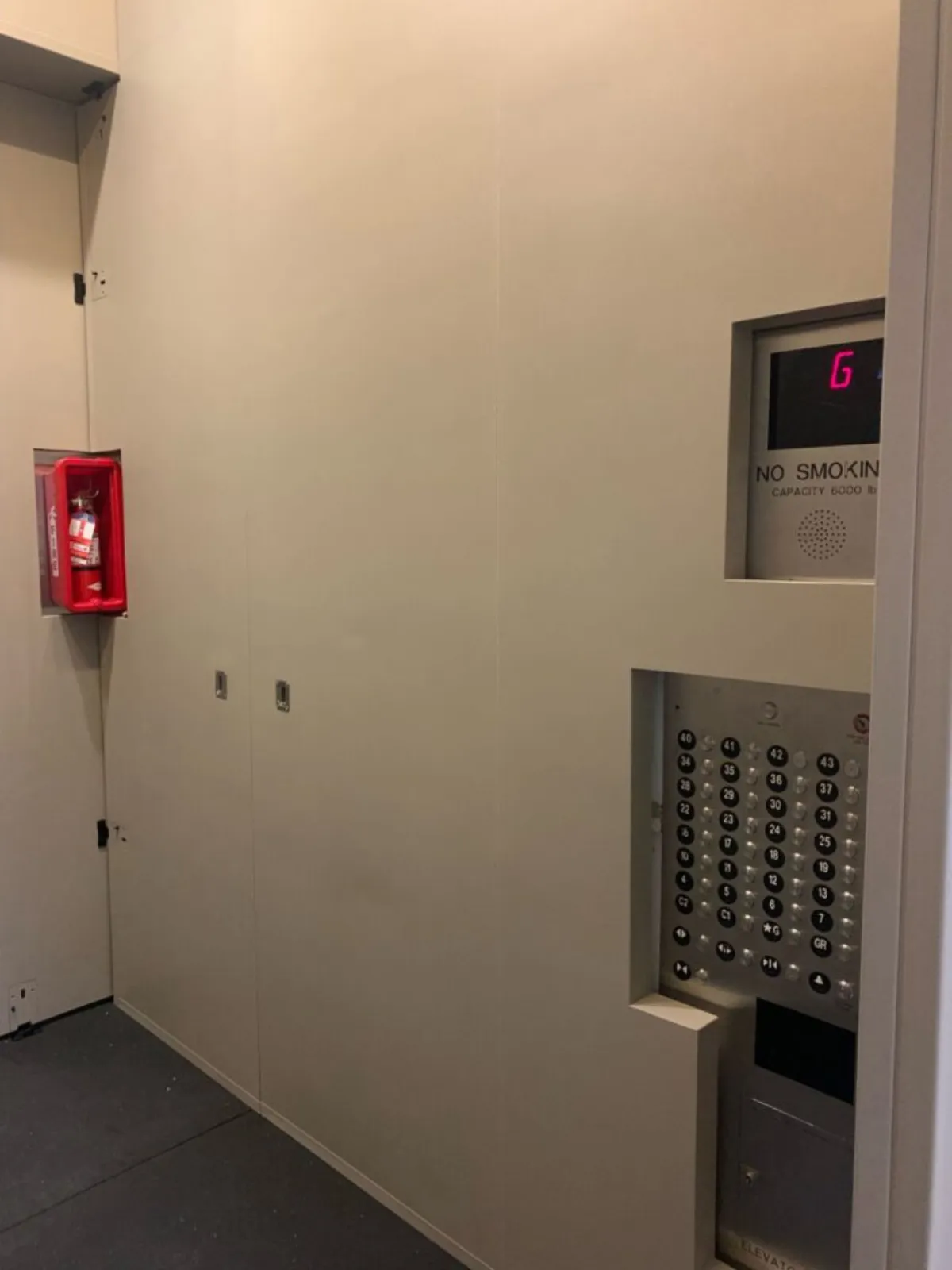
The same dolly does different damage depending on what the cab is made of. Knowing how your finish fails tells you where protection matters most and why some scratches cost more than a dent.
Stainless steel
The most common finish in commercial and newer residential cabs. It does not chip, but it scratches, and a scratch across a brushed grain is visible from across the lobby. Dents from appliance corners cannot be pulled out of a thin panel; the panel gets replaced. Matching is the hidden cost: stainless takes on a tint with age and cleaning, so one new panel stands out, and buildings end up replacing a whole wall. Lower-third wall protection is essential; corners and jambs take most of the hits.
Plastic laminate
Affordable and easy to specify, laminate is the finish that chips. A corner strike lifts the laminate from the substrate and the chip spreads. Repairs are patches at best. The good news is that laminate panels are usually removable and replaceable individually, if the pattern is still made. Discontinued patterns turn a one-panel job into a full refurbishment.
Glass and mirror
Back-painted glass, mirror panels and glass cabs in hospitality and high-end residential are the most expensive to replace and the easiest to ruin. Glass does not dent; it cracks, and a crack is a safety issue that takes the car out of service. Mirrors scratch from handrail-height contact with moving straps and boxes. A rigid cab liner with cut-outs for any mirrors that must stay visible is the only protection that keeps a hard surface between glass and freight.
Wood veneer
Veneer scratches and gouges, and refinishing in place means sanding through a thin layer. Humidity from a lined car is not a concern for the short duration of a move, but prolonged construction use should include ventilation gaps, which a custom layout accommodates.
Stone and tile floors
The floor takes the most concentrated loads: a loaded dolly on two small wheels. Stone cracks at grout lines and chips at the edges near the sill. A rigid floor liner spreads the load and wipes clean; soft runners and cardboard do not spread anything.
Ceilings
Drop ceilings and light diffusers are not built for contact. Anything tipped on end finds them. See the guide to ceiling protection.
Entrances
Door jambs and headers are hit from the lobby side by anything slightly too wide. They are also the first thing a visitor sees. The door liner covers them with the same panel system as the cab.
Choosing protection by finish
| Finish | Fails by | Priority protection |
|---|---|---|
| Stainless | Scratches, dents, mismatched replacement | Walls, corners, jambs |
| Laminate | Chips, lifting | Corners, lower walls |
| Glass, mirror | Cracks, scratches | Full rigid wall coverage |
| Wood veneer | Gouges | Walls, handrail zone |
| Stone floor | Cracks, chips at sill | Rigid floor liner |
| Drop ceiling | Dislodged tiles, broken diffusers | Ceiling liner |
Door Guard builds all of it to the cab’s measurements, in finishes that suit the building. The gallery on doorguardinc.com shows installed examples; a free quote covers your cab.